Why the SaaS Credit Crunch Could Impact Your Creator Studio Financing

What changed
The landscape for private credit is shifting as the $3 trillion private credit market encounters a significant "maturity wall." According to reports from SaaStr, the technology sector is currently carrying approximately $46.9 billion in distressed debt. With 23 out of 32 rated Business Development Companies (BDCs) facing a looming $12.7 billion in unsecured debt maturing in 2026, lenders are under immense pressure to tighten their belts. This environment contrasts sharply with previous years, as Mean CEO's BLOG points out that the current market now demands strict fiscal discipline—evidenced by median SaaS growth of 12.7% and median EBITDA margins of 22.6%—over the "easy-growth" strategies of the past.

How it works
Financial institutions and BDCs operate on cycles of borrowing and lending. When debt matures, companies must either pay it off or refinance it at current interest rates. Sources agree that the current combination of compressed SaaS valuation multiples and rising debt costs has created a liquidity trap. While BDCs previously fueled massive software growth, they are now re-evaluating risk profiles. There is an implicit consensus between SaaStr and Mean CEO's BLOG that the era of cheap, speculative capital is over, and lenders are now prioritizing operational efficiency and cash flow sustainability over raw user growth metrics.
Who it hits
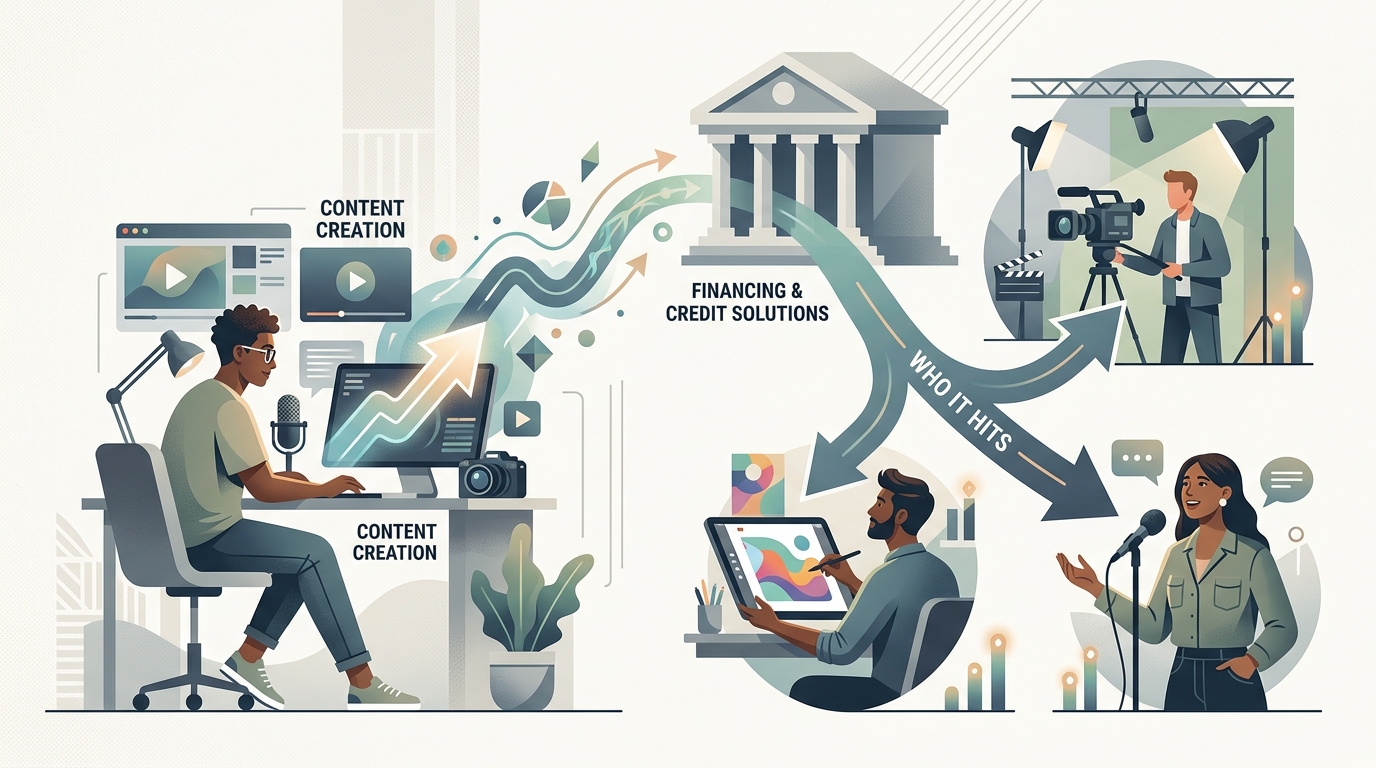
This credit crunch primarily impacts technology firms and software-heavy ventures that rely on debt to cover operating losses. However, the ripple effect extends to any industry reliant on private credit markets, as risk-off sentiment often spreads to smaller, niche lending channels that creators use for equipment financing and bridge loans.
Why this matters for professional creators
If you are a full-time creator looking to leverage debt to purchase high-end cinema cameras, upgrade your edit suite, or bridge the gap between long-term brand deal payouts, this news is a warning to prepare for tighter underwriting standards. As institutional lenders focus on protecting their balance sheets from the $46.9 billion tech debt pile, the "cost of capital" for smaller, creator-focused credit products is likely to rise. You may find that lenders are no longer just looking at your follower count or viral reach; they are increasingly scrutinizing your "EBITDA"—or your actual, take-home profit margins.
To secure capital in this environment, you must present your production studio with the same level of fiscal rigor as an enterprise tech firm. Lenders will be looking for stable cash flow, predictable brand partnership revenue, and a clear return on investment for any equipment purchases. Expect higher interest rate quotes and, potentially, more stringent documentation requirements regarding your business expenses and long-term liquidity. Preparing your financial statements now will be the difference between getting approved for that studio expansion and facing a rejection.
What business owners say
4.9-
This company was lightning fast and the experience was amazing. Thank you, Dan — you're a real pro!
-
Good service Joseph Krajewski is the best agent ever. He provided excellent service. I strongly recommend working with him if you have the opportunity.
-
They gave me a chance when nobody else would. I'm very satisfied.
Frequently asked questions
What is a 'maturity wall'?
A maturity wall occurs when a large amount of debt held by companies or investors comes due for repayment at the same time, often forcing refinancing at higher costs.
How does tech debt impact creator financing?
When institutional lenders like BDCs face risks from tech debt, they often tighten lending criteria across all sectors, making it harder for small businesses to access credit.
What should creators do to stay prepared?
Creators should focus on maintaining clear, audited records of profit margins and operating expenses to prove fiscal discipline to lenders.
- How to Use a Log Viewer to Track Your Creator Financing History (09/08/2026)
- Horizon Dashboard for Creator Financing: Track, Optimize, and Grow Your Funding in 2026 (09/08/2026)
- AWS Credentials for Creators: Secure Cloud Access and Cost Management in 2026 (09/08/2026)
- PMS for Creators: Streamlining Production, Monetization, and Marketing in 2026 (09/08/2026)
- AWS ECS Task Credentials: A Creator’s Guide to Secure Cloud Access in 2026 (09/08/2026)
- Private Key Lending for Creators: Confidential Funding in 2026 (19/07/2026)
- Creator Loan Requests 2026: Prepare, Submit & Negotiate for Better Terms (19/07/2026)
- Glendale Creator Financing and Credit Solutions for Digital Content Creators (19/06/2026)